Mobile App Development Cost in 2026: How Much Does an App Really Cost?
A practical breakdown of what drives mobile app development cost in 2026, with indicative ranges by complexity, the ongoing costs teams forget, and proven ways to spend less without cutting quality.
⚡ Key takeaways
- Scope drives cost more than anything else: every screen, integration and user role adds design, build and test effort.
- Cross-platform frameworks such as React Native and Flutter usually cost less than two native apps, but not every product suits them.
- Budget for what happens after launch: hosting, third-party services, OS updates, store fees and ongoing feature work.
- A tightly scoped MVP, a reusable backend and early QA are the most reliable ways to cut cost without cutting quality.
Mobile app development cost is one of the first questions founders and product leaders ask, and one of the hardest to answer with a single number. The honest answer is that it depends on what the app does, which platforms it runs on, how it is built and who builds it. What you can do is understand the cost drivers well enough to make informed trade-offs before you commit a budget.
This guide breaks down where the money goes in a 2026 mobile project, gives indicative ranges by app complexity, flags the costs teams forget, and shows practical ways to spend less without shipping something you will have to rebuild in a year.
What drives mobile app development cost
Every estimate is a sum of design, engineering, testing and project management hours, plus third-party services. These factors decide how many hours you need.
Features and complexity
Features are the biggest lever. A login screen, a content feed and a profile page are quick to build. Real-time chat, payments, offline sync, maps, video, complex permissions or AI-powered features each add design work, backend logic, edge cases and testing.
Complexity also hides in business rules: multi-step approvals, role-based access and audit trails can significantly increase the effort behind the same number of screens.
Platforms: iOS, Android or both
Shipping on iOS only or Android only reduces scope, but most B2C products and many B2B tools need both. Each platform has its own design conventions, device range and store review process. Supporting tablets, wearables or a companion web app extends the surface area further.
Native vs cross-platform (React Native, Flutter)
Native apps, built in Swift/SwiftUI for iOS and Kotlin/Jetpack Compose for Android, give you full access to platform APIs and the most control over performance. The trade-off is two codebases and, typically, two sets of specialist engineers.
Cross-platform frameworks like React Native and Flutter let one team ship both platforms from a single codebase. For most business apps, marketplaces and content-driven products, this is the more cost-efficient path. Apps that lean heavily on device hardware, advanced graphics or cutting-edge platform features may still justify native development.
UX and UI design
Design covers user research, journey mapping, wireframes, interactive prototypes and the final visual system. Custom animations, illustration and bespoke components add time; a well-built component library reduces it.
Backend, APIs and integrations
The app on the phone is often the smaller half of the work. User accounts, data storage, business logic, notifications, admin panels and analytics all live on the backend. Integrations with payment gateways, CRMs, ERPs, identity providers or legacy systems frequently take longer than expected because you depend on someone else’s API quality and documentation.
Security and compliance
Apps that handle health, financial or personal data need encryption, secure authentication, careful data retention and logging. Regulated industries add frameworks such as HIPAA or PCI requirements, which mean extra architecture, documentation and review. Enterprise apps may also need SSO, mobile device management (MDM) support and offline data protection.
Team location and engagement model
Rates vary significantly by region and seniority. A distributed team that combines onshore product leadership with offshore engineering can lower the blended rate while keeping communication tight. The engagement model matters too: fixed-scope projects suit well-defined builds, while dedicated teams or time-and-materials work better when requirements will evolve.
QA and device testing
Mobile QA is broader than web QA. You need to test across screen sizes, OS versions, network conditions and device performance tiers, plus accessibility and store-specific behavior.
App store release
Submitting to the App Store and Google Play involves store listings, screenshots, privacy disclosures, review responses and occasional rejections that need fixes. It is not a large line item, but it should be planned rather than squeezed into launch week. Apple’s developer documentation covers the current review guidelines and program requirements.
Indicative cost and timeline by app complexity
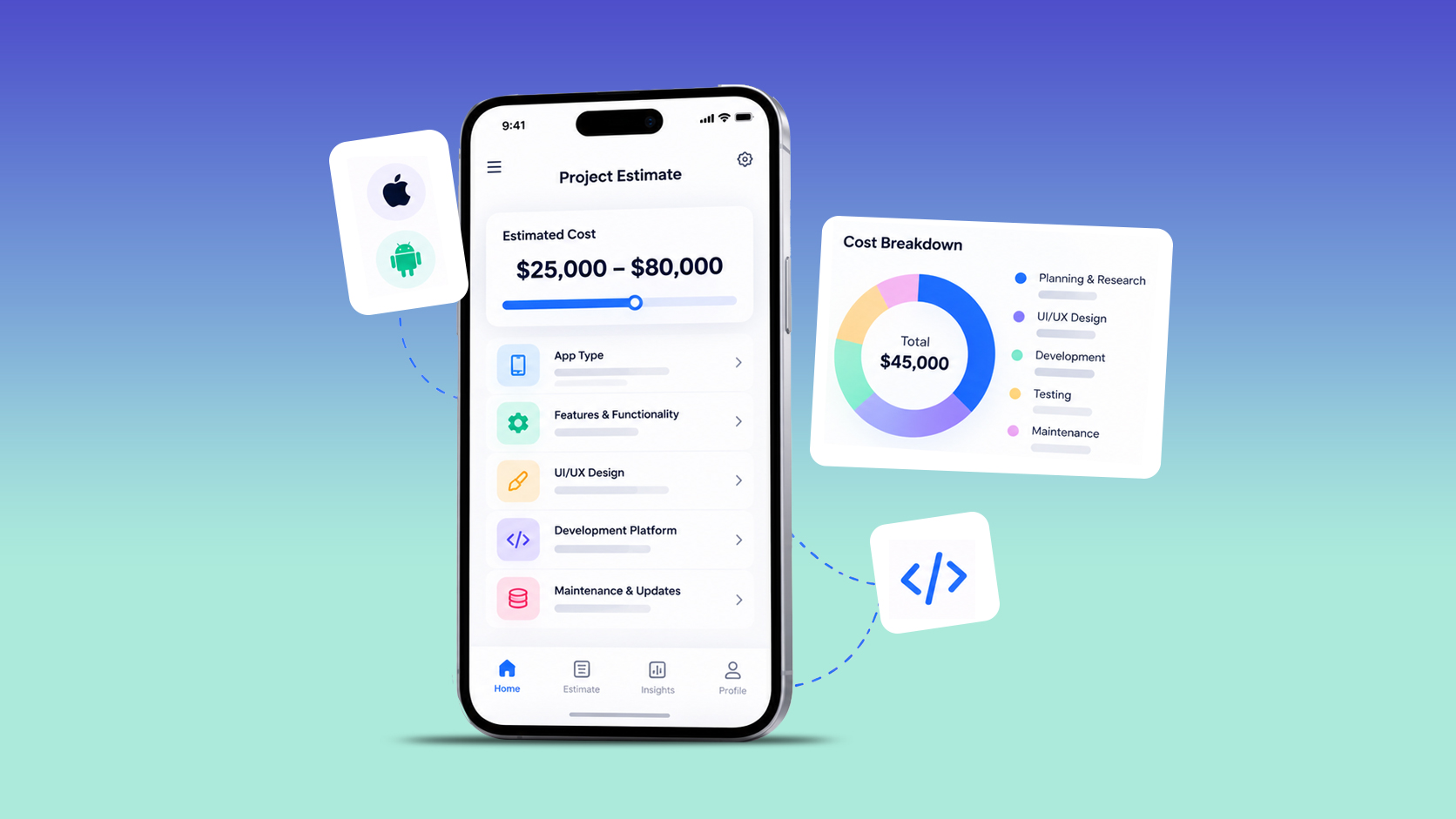
The ranges below are indicative only. They assume a professional team delivering design, cross-platform or dual-platform development, backend work and QA. Your actual figure depends on scope, integrations, compliance needs and team model, so treat this as a planning aid, not a quote.
| App complexity | Typical scope | Indicative cost range (USD) | Indicative timeline |
|---|---|---|---|
| Simple | A handful of core screens, standard login, basic content or forms, a light backend, no complex integrations | $25,000 – $60,000 | 2 – 4 months |
| Mid-complexity | User roles, payments, push notifications, third-party integrations, an admin panel, analytics | $60,000 – $150,000 | 4 – 7 months |
| Complex | Real-time features, offline sync, AI or ML features, enterprise SSO, compliance requirements, multiple integrations | $150,000 – $400,000+ | 7 – 12+ months |
Two apps in the same row can land at opposite ends of the range. A mid-complexity marketplace with one payment provider is very different from one with split payouts, dispute handling and multi-currency support.
Native vs cross-platform: how the choice affects budget
The framework decision shapes both the initial build and every year of maintenance after it. Use these criteria to decide.
- Choose cross-platform (React Native or Flutter) when you need both platforms quickly, your UI is mostly standard patterns, and your team values a single codebase for faster iteration.
- Choose native when the app depends on deep hardware access, heavy on-device processing, complex animations or new platform features on release day.
- Consider a hybrid approach when most of the app is standard but one or two features need native modules. React Native and Flutter both support native code where it is needed.
A cross-platform build usually reduces the engineering effort compared with two separate native apps, and it keeps features in sync across platforms. You will still test on both platforms and occasionally write native modules.
Planning a mobile app?
Share your idea, users and target platforms, and we will recommend the right approach and a realistic scope for your budget.
Hidden and ongoing costs to plan for
The build is only the first invoice. Teams that ignore these post-launch costs end up with an app that slowly degrades.
- Hosting and infrastructure: servers, databases, storage, CDN and backups. Costs grow with users and data volume.
- Third-party services: authentication, maps, SMS, email, push notifications, analytics, crash reporting and AI APIs are often priced per user or per request.
- Store fees: Apple’s Developer Program has an annual fee and Google Play has a one-time registration fee. Both stores also take a commission on many in-app digital purchases.
- OS and device updates: Apple and Google release major OS versions every year. APIs are deprecated, permissions change and new screen sizes appear. Android’s developer site publishes target API level requirements that apps must keep up with.
- Maintenance and bug fixes: dependency upgrades, security patches and fixes for issues that only surface at scale.
- Feature iteration: once real users arrive, you will want to act on their feedback. This is where most long-term value is created.
- Monitoring and support: crash monitoring, performance tracking and someone responsible for responding when things break.
Budget for the app you will be running in two years, not only the app you will launch in six months.
How to reduce mobile app development cost without hurting quality
Cutting cost by cutting corners, such as skipping QA or architecture, usually costs more later. These approaches reduce spend while protecting quality.
Scope a true MVP
Identify the one or two jobs your users most need done and build those well. Defer secondary features, admin conveniences and “nice to have” integrations until usage data proves they matter. A clickable prototype tested with real users is a cheap way to find out what can be cut.
Go cross-platform where it fits
For most business, marketplace and content apps, a single React Native or Flutter codebase reduces build and maintenance effort. Decide based on your feature list, not on framework trends.
Build a reusable backend
Design your APIs so the same backend serves the iOS app, the Android app, a web app and future partner integrations. Managed services such as Firebase or cloud-native building blocks can speed up early development, as long as you understand how they will scale. Our SaaS product development guide covers how to structure this from MVP to scale.
Invest early in design systems and automation
A shared component library speeds up every new screen. CI/CD pipelines with automated builds, tests and beta distribution through TestFlight and Play Store testing tracks catch problems before they become expensive.
Choose the right team model
A blended onshore/offshore team can lower your rate without compromising seniority. If you already have engineers, team augmentation can fill specific gaps, such as a senior mobile lead, instead of outsourcing the whole build.
How OMANGOM approaches mobile projects
At OMANGOM, we build iOS, Android and cross-platform apps in Swift, Kotlin, React Native and Flutter, and we choose the platform and architecture based on your users, timeline and scale. Every project starts with UX research and prototyping so the scope is validated before production code is written.
Delivery runs in two-week sprints with continuous TestFlight and Play Store beta builds, followed by device and performance testing, store submission and post-launch iteration. When the app needs a backend, our product engineering team builds it, and our Growth & Scale practice can augment your in-house team if you prefer to keep ownership internally.
Frequently asked questions
How much does it cost to build a simple app?
A simple app with a few core screens, standard login and a light backend typically falls in the indicative range of $25,000 to $60,000 with a professional team. The final figure depends on design depth, platforms and any integrations.
Is it cheaper to build with React Native or Flutter than native?
Usually, yes, when you need both iOS and Android. One codebase means less duplicated engineering and easier maintenance. Apps with heavy hardware or graphics requirements may still be better served by native development.
How long does it take to develop a mobile app?
Indicatively, a simple app takes around two to four months, a mid-complexity app four to seven months, and a complex app seven months or more. Discovery, design validation and integration complexity have the largest effect on timelines.
What are the ongoing costs of running a mobile app?
Expect recurring spend on hosting, third-party services, store fees, OS update compatibility, security patches, monitoring and new features. Plan an annual maintenance budget from day one rather than treating launch as the finish line.
Can I reduce mobile app development cost by launching an MVP?
Yes. An MVP focused on the core user journey reduces initial spend and gives you real usage data to guide what to build next. The key is to keep architecture and QA standards high so the MVP can grow rather than be rewritten.
Next steps
The most accurate way to understand your mobile app development cost is to define the scope, validate it with a prototype and get a line-by-line estimate. If you would like help doing that, talk to our team or explore our mobile development services to see how we take apps from idea to App Store and beyond.